Every animated explainer video your brand publishes, every motion logo that opens your presentation, every illustrated character that guides a customer through your product — all of it traces its lineage to a room full of artists drawing on sheets of transparent celluloid nearly a century ago.
Understanding the history of 2D animation is not just an exercise in nostalgia. It is the foundation for understanding why the medium works the way it does, why certain techniques carry specific emotional resonances, and how the evolution of tools has shaped what is now possible for brands investing in animated content. This deep-dive covers the full arc — from the birth of cel animation to the digital revolution to the motion-driven brand communication landscape of 2026.
2D animation has reinvented itself in every decade since its birth. Each reinvention expanded what was possible — and who could use it.
The Origins: Pre-Cinema and the Persistence of Vision
The conceptual foundation of animation predates film entirely. In the 1830s, optical toys like the zoetrope and phenakistoscope exploited a perceptual phenomenon called the persistence of vision — the brain’s tendency to perceive rapidly sequenced still images as continuous motion. These devices, which displayed a sequence of drawings on a spinning disc or cylinder, were the first time human beings experienced the illusion of drawn images moving.
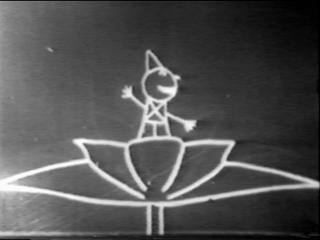
By the 1890s, film technology arrived, and with it came the first animated sequences. Emile Cohl’s 1908 short Fantasmagorie — a two-minute film composed of roughly 700 hand-drawn frames — is widely considered the first fully animated film. Each frame was drawn individually on paper, photographed, and played back to create the illusion of movement. The process was painstaking and the results primitive, but the medium had been born.
The Cel Animation Breakthrough
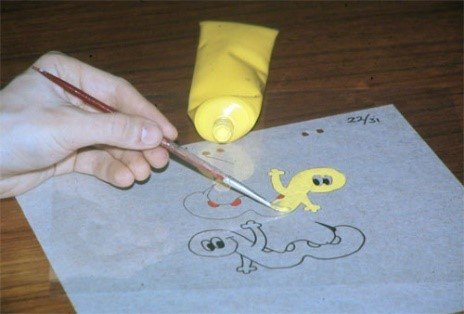
The invention that made 2D animation commercially viable was the celluloid sheet — a transparent film base on which characters could be drawn and then layered over painted background art. Developed around 1914 by Earl Hurd and John Bray, cel animation separated the character from the background for the first time, allowing animators to redraw only the moving elements in each frame rather than redrawing the entire scene. This reduced the labor required by an order of magnitude and opened the door to commercial animation production.
Within a decade, animation studios had sprung up across New York and Los Angeles, producing short films for cinema. The process was labor-intensive by any modern standard — a single minute of animation required roughly 1,440 individual hand-drawn cels — but the business model worked. Cinema audiences were hungry for novelty, and animated shorts delivered it reliably.
The Golden Age: Disney and the Twelve Principles
The 1930s through the 1950s are generally regarded as the Golden Age of American animation. During this period, the Walt Disney Studios transformed 2D animation from a novelty into a refined art form with its own codified principles, production pipeline, and emotional vocabulary.
Snow White and the Feature Film Revolution
When Disney released Snow White and the Seven Dwarfs in 1937 — the first feature-length cel-animated film in history — it demonstrated that 2D animation could sustain narrative complexity, emotional depth, and visual beauty at the scale of live-action cinema. The production employed hundreds of animators working on a system of hierarchical specialization: lead animators designed character movement, assistants cleaned up the drawings, and ink-and-paint departments transferred the images to cel. It was the first fully industrialized animation pipeline.
The Twelve Principles of Animation
From the intensive production demands of Disney’s Golden Age emerged a set of principles that remain the foundational technical and aesthetic framework of 2D animation to this day. Developed by animators Ollie Johnston and Frank Thomas and later documented in their 1981 book The Illusion of Life, the twelve principles codified what makes animated motion feel believable and emotionally resonant:
- Squash and Stretch: Objects deform as they move, communicating weight and elasticity.
- Anticipation: A movement is preceded by a preparatory motion that sets up the audience’s expectation.
- Staging: The composition of each frame is designed to direct the viewer’s attention unambiguously.
- Straight Ahead and Pose-to-Pose: Two distinct approaches to planning motion sequences.
- Follow Through and Overlapping Action: Different parts of a body or object move at different rates.
- Slow In and Slow Out: Motion accelerates and decelerates rather than moving at constant speed.
- Arcs: Natural motion follows curved paths rather than straight lines.
- Secondary Action: Supporting movements add depth and character to a primary action.
- Timing: The number of frames assigned to an action determines its perceived speed and weight.
- Exaggeration: Motion and expression are amplified beyond realism to increase emotional impact.
- Solid Drawing: Characters have three-dimensional form, weight, and structure.
- Appeal: Characters and visuals are designed to engage the audience’s interest and sympathy.
These principles did not originate for commercial brand video — but they govern it. Modern brand animators apply all twelve, whether consciously or not, every time they produce a piece of motion content.
Television, Commercial Animation, and the Rise of the Limited Style
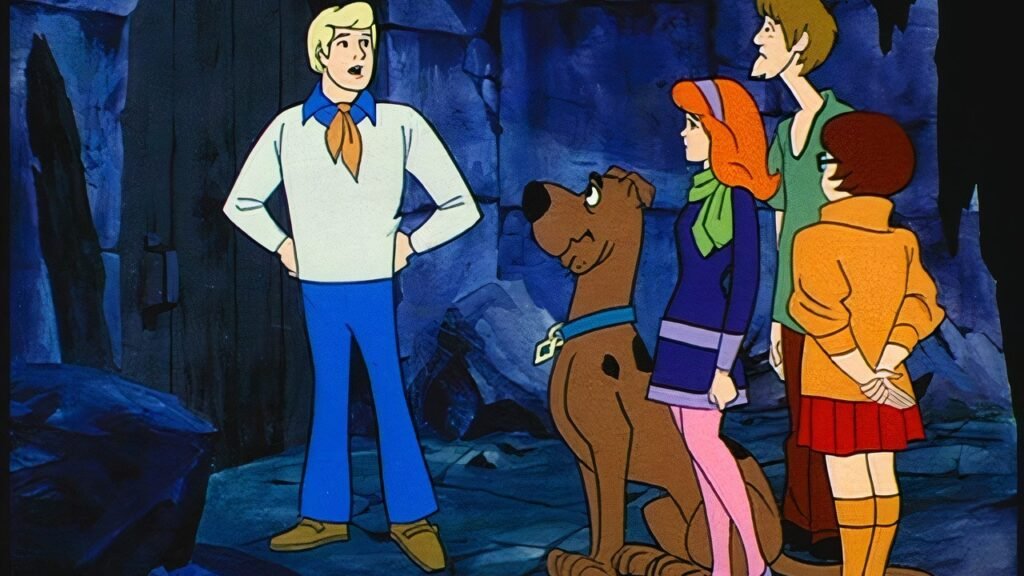
The post-war period brought 2D animation to a new medium: broadcast television. Studios including Hanna-Barbera and Jay Ward Productions pioneered a deliberately simplified animation approach — known as limited animation — that reduced the number of frames per second and reused character poses aggressively to meet the production volume and budget constraints of weekly television. Characters moved less fluidly than Disney films, but they were recognizable, expressive, and produced at a fraction of the cost.
This development was pivotal for commercial animation. It proved that high production values were not a prerequisite for effective communication through animation — that simplification, when applied deliberately, could be a design choice rather than a compromise. Hanna-Barbera’s output from the 1960s through the 1980s reached more viewers than Disney’s theatrical films had ever reached, because it reached them every week in their living rooms.
Animation Enters Advertising
By the 1950s, animated television commercials had become a mainstream advertising format. Characters like Tony the Tiger and the Jolly Green Giant became animated brand ambassadors with decades of equity. Advertisers discovered what Disney had already shown: that animated characters could carry emotional associations, build familiarity, and communicate abstract brand values in ways that live-action footage struggled to match. The foundation of animated brand communication — the use of drawn motion to make brands more memorable and more human — was established in this era.
The Digital Revolution: From Cel to Pixel
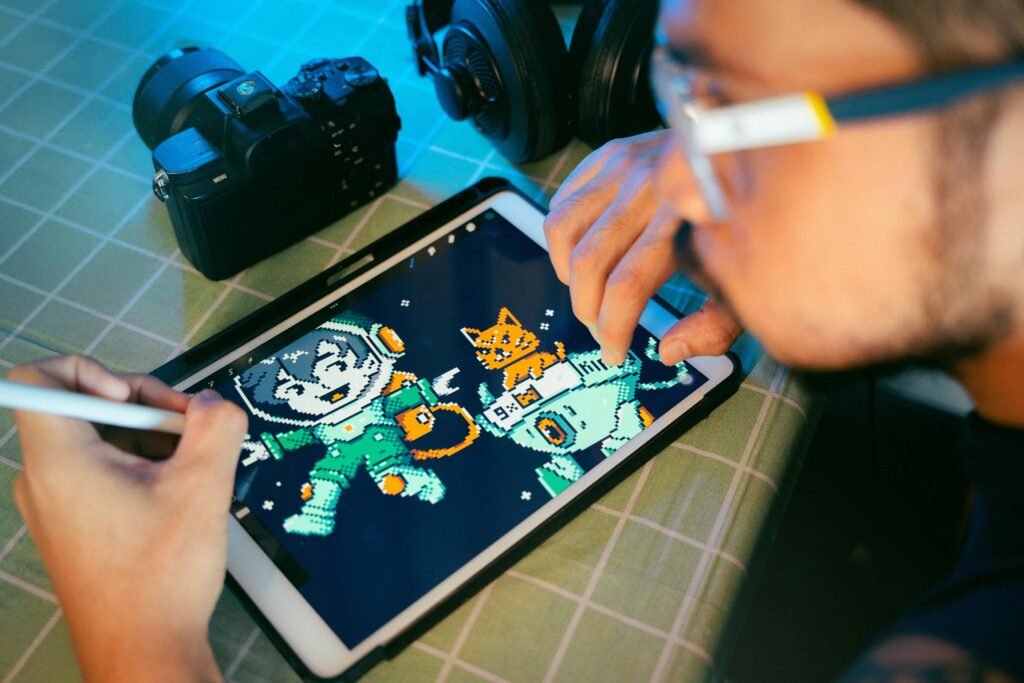
The transition from hand-drawn cel animation to computer-generated imagery began in the 1980s and accelerated dramatically through the 1990s. For 2D animation specifically, the critical shift was not the introduction of 3D CGI — which belongs to a different medium — but the replacement of physical celluloid with digital drawing tools.
Software Changes Everything
Programs like Adobe Flash (released in 1996 under the name FutureSplash Animator) democratized 2D animation production for the first time. For the previous eighty years, producing 2D animation had required a studio, specialized equipment, and a large skilled workforce. Flash reduced the barrier to entry to a single computer and a willingness to learn. Thousands of independent animators flooded the internet with Flash animations throughout the late 1990s and 2000s, establishing a new vernacular of digital 2D animation that was rougher, faster, and more experimental than the studio tradition.
More sophisticated tools followed. After Effects, Toon Boom Harmony, and Animate CC became the professional standards for digital 2D animation — tools that combined the precision of frame-by-frame drawing with the efficiency of digital rigging, compositing, and asset reuse. A production that would have required a team of 50 people and six months in the Golden Age could now be completed by a team of 5 in four weeks..
The Explainer Video Era
The mid-2000s saw the emergence of a specific 2D animation format that would define much of the medium’s commercial application for the next two decades: the animated explainer video. Companies like Common Craft popularized a simple whiteboard-style format for explaining new internet concepts — RSS feeds, Twitter, Google Docs — to mainstream audiences. The format’s simplicity, directness, and accessibility made it enormously influential.
As digital software reduced production costs and the internet created new distribution channels, the animated explainer video became the default communication format for technology companies, startups, and eventually businesses of every kind. By 2010, a professional animated explainer video had become an expected component of any serious technology company’s marketing stack.
The animated explainer video was not invented by any single studio. It emerged from the collision of cheaper production tools, hungry startup audiences, and the internet’s demand for content that explained new things quickly.
2D Animation in the Modern Brand Landscape (2015–2026)
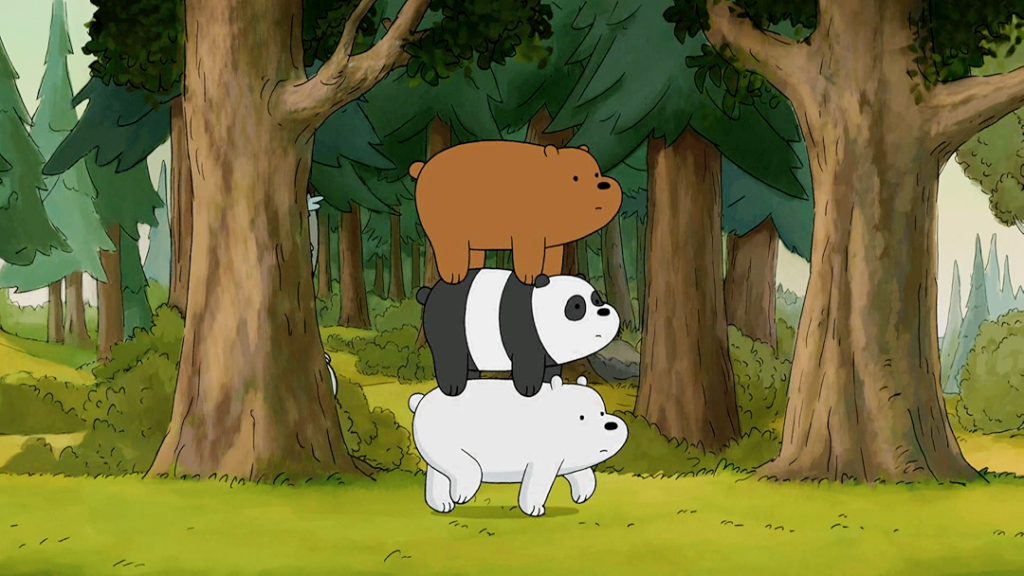
The past decade has seen 2D animation mature from a startup communication tool into a full-spectrum brand medium used by companies ranging from solo founders to Fortune 500 enterprises. Several distinct trends define the current era.
The Flat Design Wave
The rise of flat design in digital product UI — pioneered by Microsoft’s Metro design language in 2010 and popularized by Apple’s iOS 7 redesign in 2013 — had a direct influence on commercial 2D animation aesthetics. Clean geometric shapes, bold color palettes, and minimal gradients became the dominant visual language for brand animation through much of the 2010s. This style was fast to produce, universally legible, and aligned with the design sensibilities of the tech industry that was driving most animation investment.
The Return of Illustration
By the late 2010s, a reaction against the ubiquity of flat design had emerged. Brands seeking differentiation began investing in more richly illustrated 2D animation — custom-drawn characters, textured backgrounds, and hand-crafted visual worlds that reflected a specific brand personality rather than a generic design system. This trend has strengthened through the early 2020s, with illustration-led animation becoming the premium tier of brand animated content.
Motion Graphics as a Content Category
Simultaneously, motion graphics — the use of animated typography, data visualization, and abstract shapes without characters — expanded from advertising and broadcast into everyday digital content. LinkedIn posts, email newsletters, slide decks, and social media feeds are now routinely augmented with motion graphic elements. The growth of no-code animation tools like Canva and LottieFiles has pushed motion into contexts that previously used only static imagery.
The Brand Film Renaissance
The most ambitious brands have increasingly invested in long-form 2D animated brand films — three to five minute animated narratives that tell origin stories, articulate values, or communicate vision. These pieces function less as direct response tools and more as brand-building assets: they earn organic shares, appear in press coverage, and establish the brand as a creative leader in its category. For companies with the budget and strategic clarity to execute them well, animated brand films represent some of the most durable marketing investments available.
Where 2D Animation Stands in 2026
Today, 2D animation is the most widely used form of commercial animation in the United States. It spans the full spectrum from automated template tools costing a few dollars per video to bespoke illustrated productions costing six figures. The medium has never been more accessible — and never more competitive.
For brands navigating this landscape, the history of 2D animation offers a clarifying perspective: the techniques, principles, and emotional mechanisms of the medium have remained fundamentally stable for nearly a century. What has changed is the cost of production, the diversity of styles available, and the volume of content competing for audience attention. These changes make the quality and strategic intentionality of 2D animation investment more important, not less.
In an era where any brand can produce animation, the brands that invest in quality, craft, and strategic clarity are the ones whose animation actually works.
2D Animation Studio specializes in craft-led 2D animation for US brands — from illustrated explainer videos and character animation to motion graphics and brand films. Speak with our team to explore what the medium can do for your brand.
Frequently Asked Questions About the History of 2D Animation
Q1: When was 2D animation invented?
The foundation of 2D animation was developed in the first two decades of the 20th century. Emile Cohl’s first fully animated film in 1908, and the cel animation technique — which separated characters from backgrounds on transparent sheets developed around 1914 established the foundation of 2D animation.
Q2: What are the 12 principles of animation and why do they still matter?
The 12 principles of animation include:
- Squash and Stretch,
- Anticipation,
- Staging,
- Straight Ahead and Pose-to-Pose,
- Follow Through and Overlapping Action,
- Slow In and Slow Out,
- Arcs,
- Secondary Action,
- Timing,
- Exaggeration,
- Solid Drawing,
- Appeal.
They still matter because they describe the fundamental mechanics of how drawn motion creates the illusion of life, weight, and emotion. Every professional 2D animation studio applies them to their work, because they are descriptions of how human perception responds to motion.
Q3: How did digital tools change 2D animation production?
Digital tools transformed 2D animation in two fundamental ways:
- They drastically reduced the cost and time required to produce professional-quality animation,
- They made the medium accessible to a much larger pool of creators.
Before digital software, producing a minute of professional 2D animation required hundreds of hand-drawn cels, specialized photographic equipment, and a large studio workforce. This reduction in production cost is what made animated explainer videos, social media animation, and logo animation economically viable for businesses of all sizes.
Q4: What is the difference between traditional cel animation and modern digital 2D animation?
Traditional cel animation involved drawing each frame by hand on a transparent celluloid sheet, photographing it against a painted background, and assembling the sequence on film. Modern digital 2D animation replaces the physical cel with a digital drawing surface, the photographic process with compositing software, and the film strip with digital video formats. The output can look nearly identical, with many animators deliberately replicating the and imperfections of hand-drawn animation — but the process is faster, more flexible, and far more affordable.
Q5: Why did 2D animation become the dominant format for commercial brand video?
Several factors made 2D animation the default animation format.
- It is significantly more affordable to produce than 3D animation for most content types.
- It is visually flexible, representing abstract concepts, characters, data, and narrative easily.
- The animated explainer video format is highly effective for explaining new products and services to online audiences.
- The aesthetic of 2D animation aligns naturally with brand visual identities.
Q6: What does the future of 2D animation look like for brands?
The medium is evolving in several simultaneous directions. AI-assisted animation tools are beginning to reduce the time required for certain production. The aesthetic is swinging toward richer illustration and more distinctive visual worlds as brands seek differentiation from the flat-design uniformity of the past decade. And the demand for animated content is expanding into new contexts. The fundamentals of what makes 2D animation effective — clarity, emotional resonance, and purposeful motion — will not change.
2D Animation Studio brings craft, strategic clarity, and deep medium knowledge to every project. Whether you are exploring 2D animation for the first time or looking to elevate an existing program, our team is ready to help. Get in touch to start a conversation.